
한글 요약 (Korean Summary)
본 프로젝트는 Nzenlabs가 AI를 활용하여 한국형 CMS(그누보드)의 보안 안정성을 유지하면서 웹 현대화를 완수한 사례입니다. 국내 웹 생태계의 고질적인 문제인 ‘커스텀 후 유지보수 불능’ 리스크를 AI 공정 통제를 통해 해결했으며, 멀티모달 AI를 활용한 색상 기반의 제품 분류 체계로 카페트 업계에 새로운 사용자 경험(UX)을 제안했습니다. 단순한 개발 자동화를 넘어, 인간 기획자의 의도에 따라 시스템을 더 안전하고 지속 가능하게 만드는 AI 오케스트레이션의 실질적인 성과를 담고 있습니다.
The Deco Korea Project: Setting a New Standard for CMS Customization with AI
The Deco Korea web project is a prime example of how AI can successfully execute a commercial web development project under the precise guidance of a human architect. While web development has become a highly efficient task for AI, the real challenge lies in long-term operation. For business catalog websites in the Korean market, a familiar Content Management System (CMS) is essential for managers to update products and sales status in real-time.
Strategic Choice within the Local Ecosystem
In the global CMS market, WordPress holds the highest market share, even in Korea. However, within Korea’s unique web ecosystem, “Gnuboard”—a system traditionally strong in community-driven structures—remains a major pillar for corporate websites. This is largely due to the familiarity of local web agencies with the platform and the fact that it has become the most intuitive interface for Korean users over the decades.
Sustainable Maintenance: The ‘Zero-Core Modification’ Principle
Unlike WordPress, where plugins and themes are strictly separated from the core solution, Gnuboard allows for high-freedom customization. However, this flexibility often leads developers to modify core files, creating “technical debt” that makes it nearly impossible to apply official security patches or functional updates later.
Left to its own devices, an AI is likely to modify any part of the code—including the core—to achieve a goal efficiently. To prevent this, Nzenlabs enforced a strict “Zero-Core Modification” protocol. We guided the AI to bypass core changes through creative logic, ensuring that the system remained fully compatible with official security updates released during the development process.

Business Innovation: Shifting the Paradigm of Product Discovery
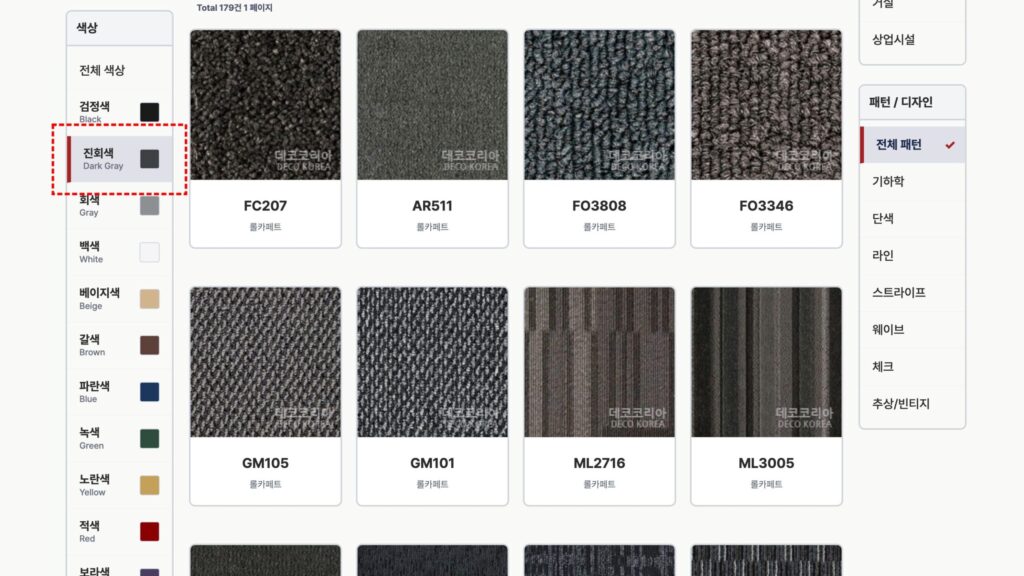
Deco Korea, a distributor of carpets and flooring, embraced a new proposal: a product navigation system based on ‘Color’ rather than traditional technical specifications. Recognizing that carpets are not just flooring but a key element of interior coloring, we designed a system where interior designers and consumers can intuitively select products based on the mood and pattern of their space.
AI Orchestration: From Data to Implementation
Throughout the project, AI functioned as a sophisticated partner rather than a simple tool:

- Data Intelligence: Multimodal AI analyzed thousands of carpet images to classify colors and systematize patterns. It also enhanced low-resolution images to match the actual product quality, ensuring visual excellence.
- Design & Development: Figma AI generated the initial UI layouts based on human intent, which were then transformed into a functional Gnuboard theme by Cursor (an AI-powered code editor).
While the human architect served as the guide—managing data flow and fine-tuning CSS for human aesthetics—the AI handled the bulk of the development work. By adhering to the ‘Core-Safe’ rule, the AI proactively found workarounds, demonstrating that custom freedom and system stability can coexist.
Conclusion: AI for a Safer, Greater Purpose
Many software systems become obsolete because maintenance becomes impossible after heavy customization. This project proves that with the right rules and clear intent, AI can minimize the risks associated with customization.
The Deco Korea project is a small but significant step. Through this case, Nzenlabs aims to deliver a message: we use AI not just for convenience, but to provide innovative proposals for industries and to build safer, more sustainable digital foundations.